
Wiki / Folklore
Amoo Nowruz
Much like Santa Claus in Western traditions, Amoo Nowruz is depicted as a kind, elderly man who brings joy, gifts, and the promise of a new season to the people...
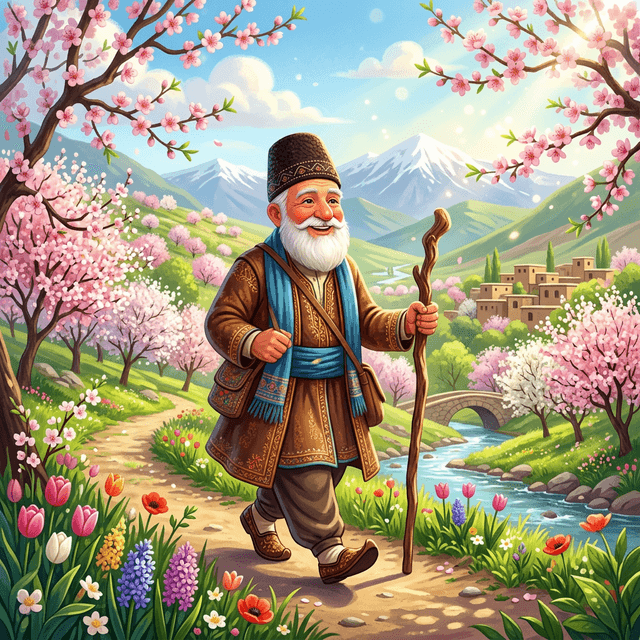
Amoo Nowruz
Amoo Nowruz (Persian: عمو نوروز), translating to "Uncle Nowruz," is a legendary folklore character in Iranian culture. He is the traditional herald of the Persian New Year and the personification of spring.
Much like Santa Claus in Western traditions, Amoo Nowruz is depicted as a kind, elderly man who brings joy, gifts, and the promise of a new season to the people.
Appearance and Characteristics
Amoo Nowruz is traditionally represented as an old man with a long, white beard indicating his ancient wisdom. He is typically dressed in traditional Iranian nomadic or pastoral clothing, which includes:
- A felt hat (kolah namadi).
- A canvas shirt and a wide woven belt.
- Giveh (traditional Persian woven footwear).
- A walking stick.
He is often depicted carrying gifts, sweets, or playing a traditional instrument, walking through the mountains and villages to announce that spring has arrived.
The Legend of Amoo Nowruz and Naneh Sarma
In Persian folklore, the story of Amoo Nowruz is deeply intertwined with Naneh Sarma (Grandma Frost), who represents the harshness of winter.
According to the legend, Naneh Sarma is deeply in love with Amoo Nowruz and waits the entire year for him to arrive. On the eve of the vernal equinox, she cleans her house (Khaneh Tekani) and prepares a beautiful spread to welcome him. However, exhausted from her preparations, she always falls asleep just before he arrives.
Amoo Nowruz enters, sees her sleeping, and chooses not to wake her. Instead, he eats some of the food, places a spring flower (usually a marigold or a hyacinth) by her side, and leaves to continue bringing spring to the world. When Naneh Sarma wakes up and realizes she missed him, she is heartbroken but begins waiting for the next year.
This poignant, unrequited love story perfectly symbolizes the transition of the seasons: Winter and Spring can never coexist; as one arrives, the other must fade away.