History & Origins
The Ancient Roots of Nowruz
Trace the 3,000-year heritage of the Persian New Year — from Zoroastrian rituals to the myth of King Jamshid.
The Zoroastrian Heritage
Before the arrival of Islam in the 7th century, the Persian Empire practiced Zoroastrianism — one of the world's oldest monotheistic religions, built upon the eternal struggle between good and evil, light and darkness, truth and deceit.
In this ancient faith, Nowruz was the holiest day of the year. It symbolized the ultimate triumph of good — represented by light, warmth, and spring — over evil — represented by darkness, cold, and winter.
The Spirit of Summer
In Zoroastrian myth, Rapithwin — the spirit of noon and summer — retreats beneath the earth during winter to keep the roots of plants warm. On Nowruz, Rapithwin emerges above ground, bringing warmth back to the world.
The Myth of King Jamshid
The Shahnameh (The Book of Kings), the greatest epic poem of Greater Iran, credits the legendary King Jamshid with the creation of the festival.
The story tells of a time when the world was plunged into a devastating, apocalyptic winter. King Jamshid, possessing a glorious jewel-studded throne, commanded demons to raise him into the heavens. He flew through the sky like the sun itself, radiating warmth and light, saving humanity.
The day he descended back to earth, bringing with him the rebirth of the world, was declared “Nowruz” — the New Day.
The Empire's Golden Era
Historical records show that by 538 BCE, Cyrus the Great — founder of the Achaemenid Empire — officially declared Nowruz a national holiday. The celebrations lasted nearly two months.
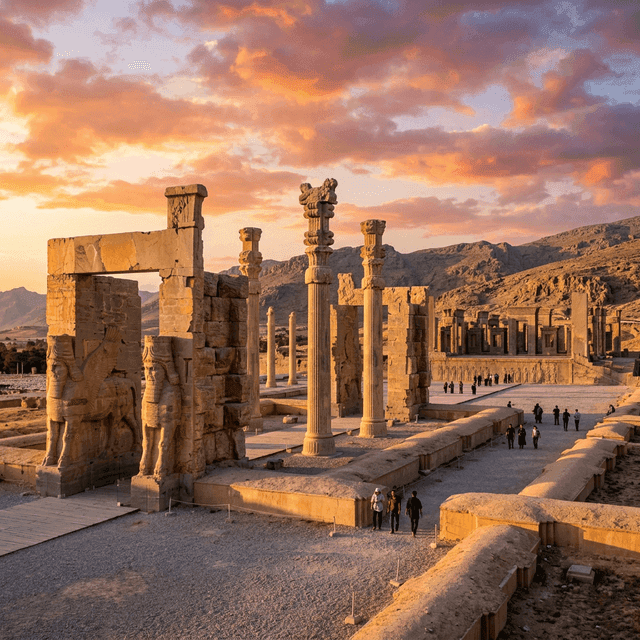
At the ancient capital of Persepolis, massive limestone bas-reliefs still stand today, depicting dignitaries from all corners of the empire — from Ethiopia to India — bringing Nowruz tributes to the Shahanshah (King of Kings).
Today, over 300 million people worldwide celebrate Nowruz, maintaining a 3,000-year unbroken chain of joy, renewal, and hope.