Cuisine & Culture
The Cuisine of Spring
Herbed rice, noodle stews, and mountains of sweets — the mouth-watering, deeply symbolic dishes that define Nowruz.
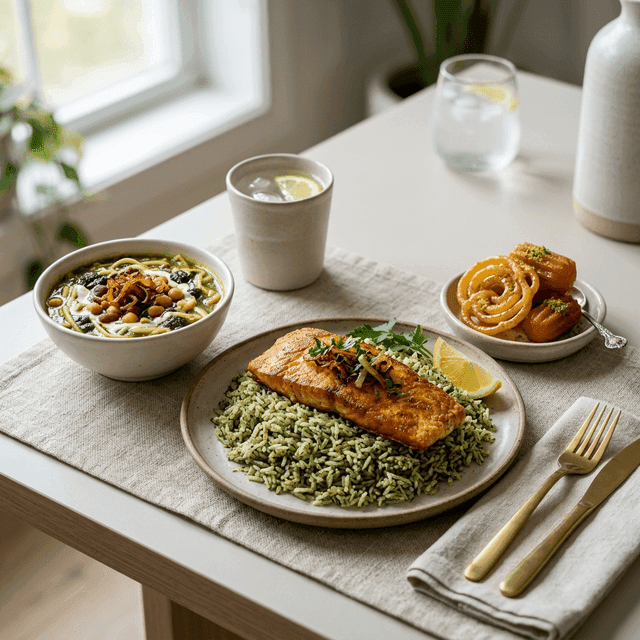
Sabzi Polo ba Mahi
Herbed Rice with White Fish
This is the undisputed king of the Nowruz Eve dinner table. Long-grain basmati rice is mixed with a fragrant mountain of finely chopped fresh herbs — dill, cilantro, parsley, and garlic chives — then steamed to fluffy perfection.
Symbolism
The deep, vibrant green of the rice symbolizes reborn nature, growth, and the arrival of spring. The fish represents life, fluidity, and moving forward.
Read recipe & historyAsh-e Reshteh
Persian Noodle Stew
A thick, rich, herbaceous stew containing beans, lentils, chickpeas, spinach, and topped with caramelized onions, fried mint garlic oil, and kashk (tangy fermented whey).
Symbolism
The tangled noodles represent life's knotted problems. Eating them 'untangles' the difficulties of the coming year, giving clarity and a straight path forward.
Read recipe & historyKuku Sabzi
Fresh Herb Frittata
Imagine a frittata that is entirely herbs held together by a whisper of egg. Packed with parsley, cilantro, dill, and scallions, often studded with chopped walnuts and tart dried barberries.
Symbolism
The profound green color celebrates spring foliage, fertility, and abundance.
Read recipe & historyShirini: The Sweets
A Persian host would never let a guest leave without an alarming amount of sugar. During Nowruz, the tables overflow with shirini — sweets — to wish guests a “sweet” year ahead.
Naan-e Nokhodchi
Tiny, clover-shaped cookies made from roasted chickpea flour and cardamom. They melt on your tongue without chewing.
Baklava
Flaky pastry filled with chopped nuts, drenched in rosewater and cardamom syrup.
Sohan
A rich, brittle toffee from the city of Qom, heavily spiced with saffron and loaded with pistachios.
Global Tastes of Nowruz
Because Nowruz is celebrated across many nations, the culinary traditions vary beautifully across borders. While the themes of spring, sweetness, and fertility remain constant, the dishes themselves tell the story of their local cultures.
Samanu Various Regions
A sweet, earthy pudding made entirely from germinated wheat. Across Iran, Afghanistan, Tajikistan, and Uzbekistan, cooking Samanu is a communal event. Women and girls gather to stir the massive pots overnight, singing memorable folk songs as they work.
Haft Mewa Afghanistan
Instead of the Haft-Seen table, many families in Afghanistan prepare Haft Mewa (Seven Fruits). It is a luxurious compote made of seven different dried fruits and nuts — like raisins, silver berries, pistachios, hazelnuts, prunes, walnuts, and almonds — served in a sweet syrup.
Nauryz Kozhe Kazakhstan
In Kazakhstan, the new year begins by consuming Nauryz kozhe, a traditional, deeply nourishing drink typically made from seven ingredients including water, meat, salt, lipid, cereal, and kefir or milk, symbolizing joy, luck, and wisdom.
Khoncha Azerbaijan
The Azerbaijani Nowruz display centers around the Khoncha. This large silver or copper tray features green, sprouting wheat (samani) in the middle, surrounded by dyed eggs and at least seven colorful dishes and pastries.