
Wiki / Food
Kuku Sabzi
The typical herb mixture is very similar to Sabzi Polo: Parsley Cilantro Dill Chives or Scallions
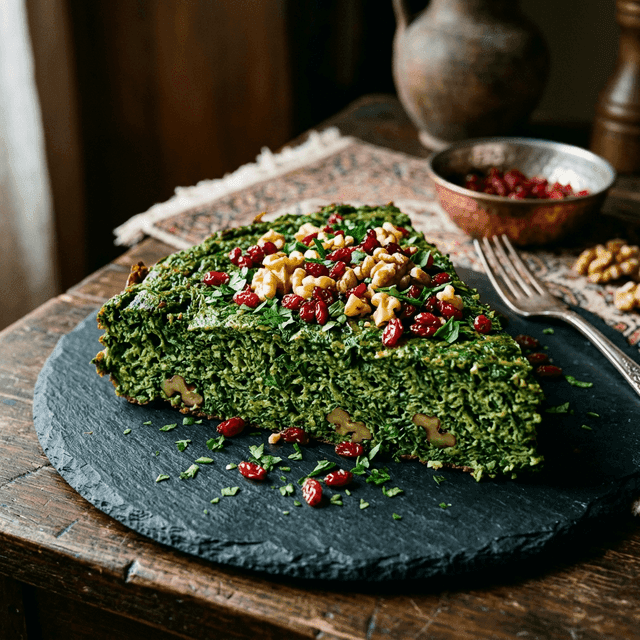
Kuku Sabzi
Kuku Sabzi (Persian: کوکو سبزی) is a traditional Persian herb frittata or thick omelet that is a staple of the Nowruz menu. It is famously vibrant green inside and out, packed with fresh herbs.
Symbolism
Like Sabzi Polo, the overwhelming amount of green herbs in Kuku Sabzi symbolizes the rebirth of nature, fertility, and the lushness of the spring season. The eggs used to bind the frittata symbolize fertility, creation, and human origins (echoing the painted eggs on the Haft-Sin table).
Ingredients
Unlike Western frittatas where eggs are the main ingredient and herbs are a garnish, in Kuku Sabzi, the herbs are the star, and the eggs simply act as a binder.
The typical herb mixture is very similar to Sabzi Polo:
- Parsley
- Cilantro
- Dill
- Chives or Scallions
To add complexity and texture, two uniquely Persian ingredients are almost always folded into the batter:
- Zereshk (Barberries): Tiny, tart dried red berries that provide a sharp, tangy contrast to the earthy herbs.
- Gerdoo (Chopped Walnuts): Provide a rich, buttery crunch.
The mixture is seasoned with salt, pepper, turmeric, and sometimes a dash of advieh (Persian spice mix) or baking powder for fluffiness.
Preparation and Serving
The thick batter is poured into a hot, oiled skillet and cooked slowly over low heat until the bottom forms a dark, crispy crust. It is then flipped (or finished in the oven) to cook the other side.
Kuku Sabzi is often cut into wedges and served as a side dish alongside Sabzi Polo Ba Mahi on Nowruz, or eaten cold the next day wrapped in flatbread (Lavash or Sangak) with feta cheese and tomatoes.