Wiki / Traditions
Eidi (New Year's Gift)
In the weeks leading up to Nowruz, banks across Iran and other celebrating countries are flooded with people exchanging their old bills for stacks of brand-new,...
Eidi (New Year's Gift)
Eidi (Persian: عیدی) is the traditional gift given during the Nowruz holidays. While the concept of gift-giving during the new year is universal, Eidi has specific cultural rules, formats, and deeply ingrained etiquette.
The Tradition of Crisp Banknotes
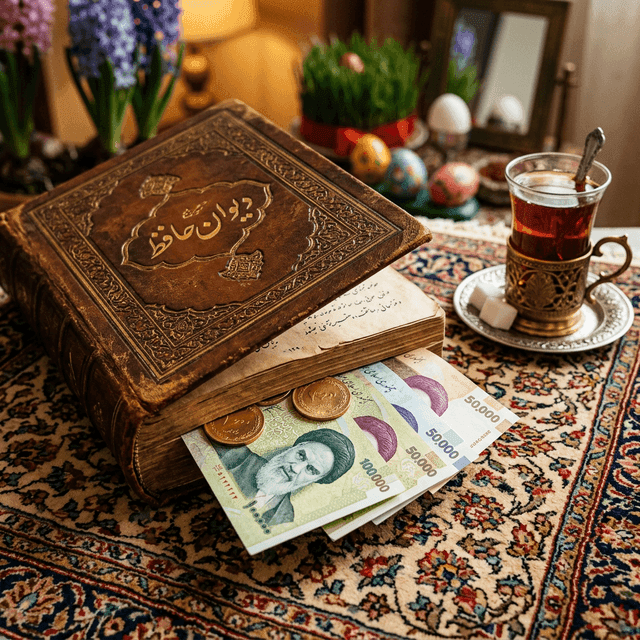
In traditional Nowruz celebrations, Eidi does not consist of wrapped presents or toys. Instead, Eidi is almost exclusively given in the form of crisp, newly printed paper money.
In the weeks leading up to Nowruz, banks across Iran and other celebrating countries are flooded with people exchanging their old bills for stacks of brand-new, uncirculated banknotes specifically for this purpose.
How Eidi is Given
The distribution of Eidi happens immediately following Tahvil-e Saal (the exact moment of the spring equinox) and continues throughout the 13 days of visiting (Did-o-Bazdid).
- The Hierarchy of Giving: Eidi flows strictly down the generational ladder. Elders (grandparents, parents, older aunts, and uncles) give Eidi to the younger members of the family (children, teenagers, and young adults). Younger members do not give Eidi to elders.
- The Book Tradition: To make the money physically and spiritually significant, the elder of the family will often place the new banknotes between the pages of a culturally important book—most commonly the Quran, the Divan of Hafez, or the Shahnameh—a few hours before the new year. After the year turns, they open the book and distribute the "blessed" money.
- Respect and Etiquette: When receiving Eidi, younger individuals are expected to politely decline once or twice out of respect (Ta'arof) before graciously accepting it with both hands, thanking the elder, and wishing them a long life (Sad Sal Be In Sal-ha).
Modern Adaptations
While crisp banknotes remain the gold standard, modern Eidi has evolved slightly. In diaspora communities or among young families, gift cards, gold coins (Sekkeh), or small wrapped gifts are sometimes given to young children instead of cash. However, the core spirit of elders bestowing a blessing of prosperity upon the youth remains exactly the same.