Wiki / Global
Newroz in Kurdistan
In Kurdish culture, the holiday is pronounced Newroz (نەورۆز) and holds profound cultural, historical, and political significance. For Kurds living across Iran,...
Newroz in Kurdistan
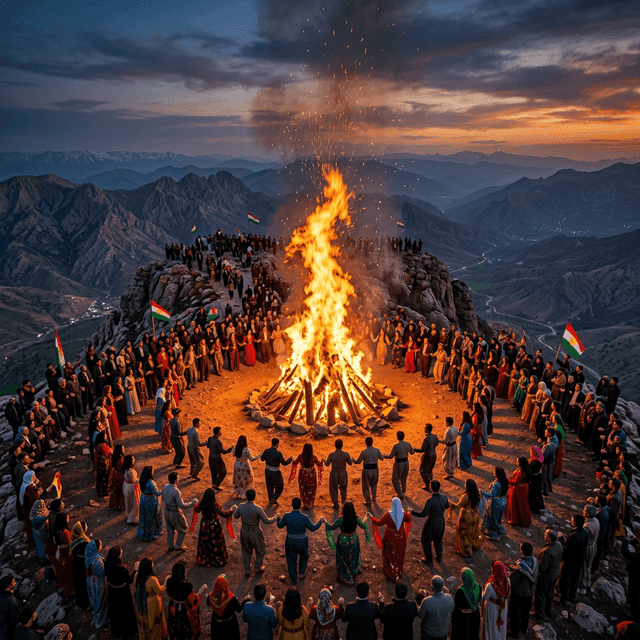
In Kurdish culture, the holiday is pronounced Newroz (نەورۆز) and holds profound cultural, historical, and political significance. For Kurds living across Iran, Iraq, Turkey, and Syria, Newroz is not only a celebration of the spring equinox but also a powerful symbol of freedom, resistance, and Kurdish national identity.
The Legend of Kawa the Blacksmith
The Kurdish celebration of Newroz is deeply tied to the mythology of Kawa the Blacksmith (Kawa Hesinkar) and his defeat of the tyrannical Assyrian king, Zahak (or Dehak).
According to legend, Zahak was an evil ruler who had two serpents growing from his shoulders. To appease the serpents and prevent them from eating his brain, Zahak demanded that two young men be sacrificed every day so their brains could be fed to the snakes.
Kawa, a humble blacksmith who had already lost several of his own children to the tyrant, led a popular uprising. On the eve of spring, Kawa stormed the tyrant's castle, struck Zahak down with his hammer, and freed the people. To signal the victory to the surrounding villages, Kawa lit a massive bonfire on the mountaintops.
Today, the lighting of fires on Newroz is a direct homage to Kawa's victory fire, symbolizing the triumph of light over tyranny and freedom over oppression.
Traditions and Celebrations
Kurdish Newroz celebrations are vibrant, communal, and heavily focused on the outdoors.
- Mountain Bonfires: The most iconic image of Kurdish Newroz is the lighting of massive bonfires on hillsides, mountaintops, and in city squares. People gather around the fires, and young men and women leap over the flames.
- Traditional Dress: Newroz is a time to wear traditional, colorful Kurdish clothing. Women wear bright, multi-layered dresses often adorned with sequins and gold coins, while men wear traditional loose-fitting trousers and wrapped waistbands.
- Govend (Halay): Music and dance are central to the festival. Communities join hands in large, sweeping circles to perform traditional line dances (Govend or Halay) to the energetic beat of the dahol (drum) and the high-pitched melody of the zurna (a woodwind instrument).
- Picnics: Similar to the Iranian Sizdah Bedar, Kurdish families spend the days surrounding Newroz picnicking in the green valleys and mountains, celebrating the rebirth of nature.