
Wiki / Food
Sabzi Polo Ba Mahi
The fish is typically marinated in saffron, lemon juice, salt, and pepper, then pan-fried until the skin is crispy, though it can also be baked or smoked (Mahi ...
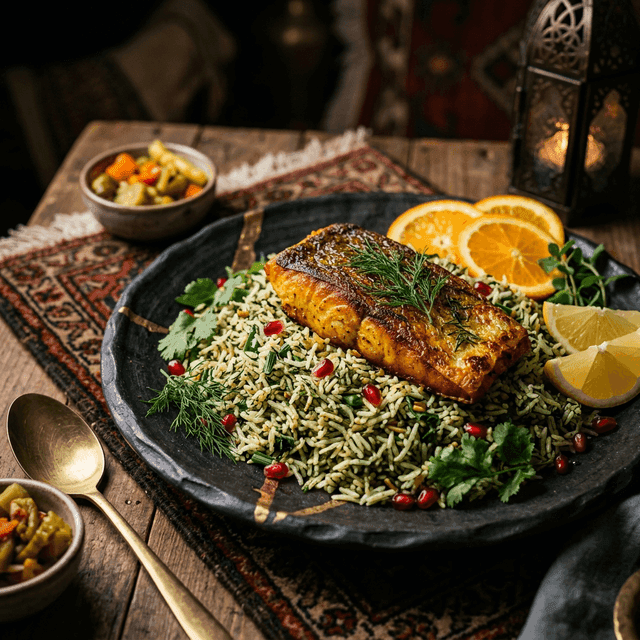
Sabzi Polo Ba Mahi
Sabzi Polo Ba Mahi (Persian: سبزی پلو با ماهی) is the most iconic and traditional meal eaten by Iranian families on the eve or the first day of Nowruz. It consists of fragrant herb rice (Sabzi Polo) served with fish (Mahi).
Symbolism
Every element of this dish is rich with meaning for the new year:
- Sabzi (Herbs): The vibrant green color of the chopped herbs symbolizes the lushness of spring, rebirth, and the awakening of nature.
- Polo (Rice): Rice is a staple of the Iranian diet and represents sustenance, abundance, and wealth.
- Mahi (Fish): Fish represent life, movement, and the astrological sign of Pisces (which the sun leaves as the new year begins).
Ingredients and Preparation
The dish is a masterpiece of Persian culinary technique, combining delicate flavors and textures.
The Herb Rice (Sabzi Polo)
The rice is prepared using the traditional Persian boiling and steaming method to achieve a fluffy texture with a crispy bottom crust (Tahdig). The rice is layered with a massive quantity of finely chopped fresh herbs. The standard herb mix includes:
- Dill (Shivid)
- Cilantro (Geshniz)
- Parsley (Jafari)
- Chives or Scallions (Tareh or Piazcheh)
- Fresh garlic or green garlic shoots (highly traditional for Nowruz)
The Fish (Mahi)
Traditionally, the fish used is Mahi Sefid (Caspian Kutum or Caspian White Fish), which is native to the Caspian Sea in northern Iran. Because it can be difficult to find outside the region, diaspora communities often substitute it with sea bass, tilapia, or salmon.
The fish is typically marinated in saffron, lemon juice, salt, and pepper, then pan-fried until the skin is crispy, though it can also be baked or smoked (Mahi Doodi).
Serving
The dish is served on a large platter, often garnished with saffron-infused rice and slices of bitter orange (Narenj) or lemon, which are squeezed over the fish right before eating.