Wiki / Culture
Zoroastrianism and Nowruz
While Nowruz is largely celebrated today as a secular, cultural holiday, its historical roots are deeply embedded in Zoroastrianism, the ancient pre-Islamic rel...
Zoroastrianism and Nowruz
While Nowruz is largely celebrated today as a secular, cultural holiday, its historical roots are deeply embedded in Zoroastrianism, the ancient pre-Islamic religion of Iran. For over 3,000 years, the celebration of the vernal equinox has been tied to Zoroastrian cosmology and theology.
The Triumph of Light
Zoroastrianism is fundamentally based on the dualistic cosmic struggle between Asha (truth, order, and light) and Druj (falsehood, chaos, and darkness). The supreme creator, Ahura Mazda, represents light and goodness, while the destructive spirit, Angra Mainyu, represents darkness and evil.
In this cosmological framework, the changing of the seasons is a literal battlefield. Winter is seen as the work of the destructive spirit, bringing cold, darkness, and death to the natural world. The vernal equinox (the first day of spring) marks the exact moment when the days become longer than the nights. Therefore, Nowruz is a religious celebration of Ahura Mazda's ultimate victory: the triumph of light over darkness, and life over death.
The Festival of Rapithwin
In ancient Zoroastrian tradition, Nowruz was intricately connected to the spirit of summer, known as Rapithwin.
According to myth, when the demon of winter invaded the earth, Rapithwin retreated beneath the ground to protect the roots of the plants and keep the waters warm, preventing all life from freezing to death. On the day of Nowruz, as the sun crossed the celestial equator, Rapithwin triumphantly returned to the surface, bringing the warmth of spring with him. Zoroastrians celebrated his return with special prayers and rituals at noon on Nowruz.
The Gahanbars and the Creation of Fire
Nowruz is the climax of the Zoroastrian religious calendar. It is the seventh and most important of the obligatory feasts, known as the Gahanbars. Each Gahanbar celebrates a different phase of Ahura Mazda's creation of the world (sky, water, earth, plants, animals, and humans).
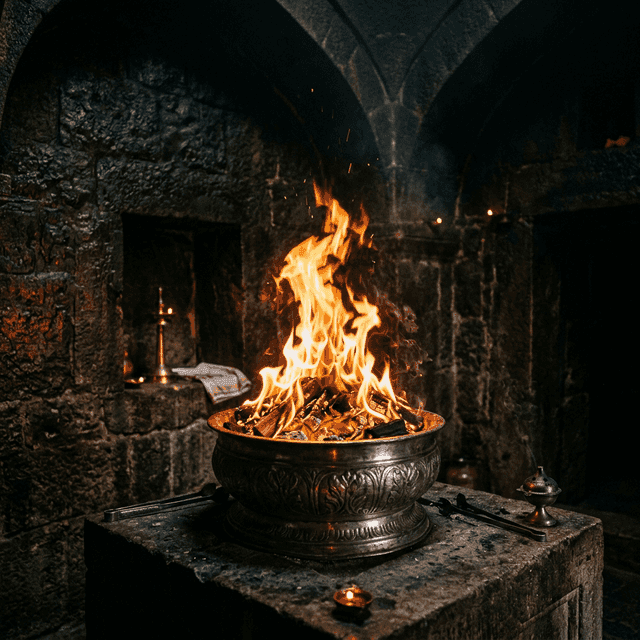
The seventh feast, Nowruz, celebrates the final and most sacred creation: Fire. Fire is the ultimate symbol of Ahura Mazda's divine light and wisdom. This ancient reverence for fire is still visible in modern Nowruz traditions, particularly in the lighting of bonfires during Chaharshanbe Suri (the Festival of Fire) just before the new year.
Evolution into a Cultural Holiday
Following the Islamic conquest of Persia in the 7th century CE, the religious landscape of the region shifted drastically. However, Nowruz was so deeply ingrained in the culture and agricultural cycles of the people that it survived the transition. Over the centuries, it shed many of its specific Zoroastrian religious rituals but retained its core themes of rebirth, spring, and the triumph of light, transforming into a universal cultural celebration.